

Bitcoin price falls below $60K as hot U.S. jobs report crushes rate cut hopes
Bitcoin price has fallen below $60,000 after a stronger-than-expected U.S. jobs report prompted traders to scale back expectations for Federal Reserve rate cuts and price in a higher probability of policy tightening later this year.
Summary
- Bitcoin fell below $60,000 after a stronger-than-expected U.S. jobs report reduced expectations for Fed rate cuts and increased odds of rate hikes later this year.
- More than $1.7 billion in crypto positions were liquidated as leveraged traders rushed to exit after BTC lost a key support level.
- Despite the selloff, spot Bitcoin ETFs recorded net inflows for the first time in 13 trading days, while on-chain data suggests capitulation among short-term holders may be reaching extremes.
According to data from crypto.news, Bitcoin (BTC) price fell to an intraday low of around $59,100 on June 5 before stabilizing near $59,400 at press time. The move extended a 10-day decline of roughly $19,000 from recent highs and pushed the cryptocurrency below the closely watched $60,000 support area for the first time since 2024.
Fresh labor market data triggered the latest wave of selling. The U.S. economy added 172,000 nonfarm payrolls in May, far above expectations of 85,000, while the unemployment rate held steady at 4.3%. Revised data also added 93,000 jobs to the previous two months, reinforcing the view that labor conditions remain resilient despite slowing growth elsewhere.
BNP Paribas added to the hawkish narrative this week after abandoning its expectation for stable monetary policy and forecasting three Federal Reserve rate hikes beginning in December. The bank cited persistent inflation risks, firm employment conditions, and the potential impact of the ongoing U.S.-Iran conflict on energy prices.
Following the jobs report, Polymarket assigned a 52% probability to a Fed rate increase before year-end, while CME FedWatch showed a 42.7% chance that rates will be higher by December.
Derivatives markets amplified the selloff as leveraged positions unraveled. CoinGlass data showed that more than $155 million in crypto long positions were liquidated within a single hour, while total liquidations topped $1.7 billion over the past 24 hours. Forced selling accelerated after Bitcoin lost the $60,000 level, triggering liquidation engines across major exchanges.
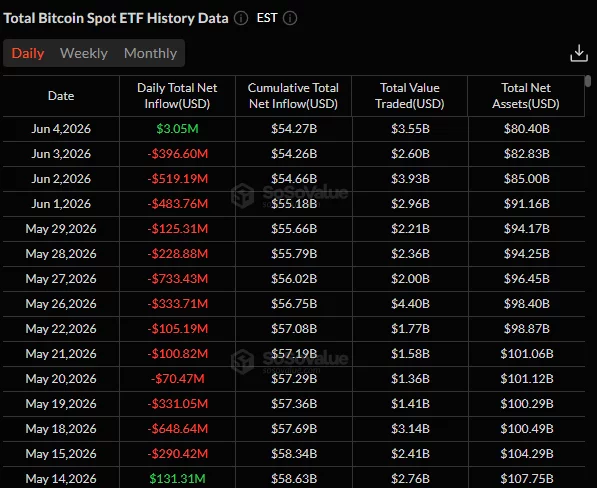
Institutional flows offered one of the few signs of stabilization. U.S. spot Bitcoin ETFs recorded roughly $3 million in net inflows on June 4, ending a 13-day streak of withdrawals that had drained $4.37 billion from the funds, per data from SoSoValue. Although the inflow was modest, it interrupted the longest period of sustained selling pressure from ETF investors this year.
Meanwhile, traditional safe-haven assets failed to attract buyers during the risk-off move. Gold fell roughly 3.5% while silver dropped 7.5%, suggesting investors were reducing exposure across multiple asset classes rather than rotating capital into precious metals.
Strategy also returned to the spotlight as Bitcoin traded below the firm’s average acquisition cost. The company’s unrealized losses have climbed above $12.7 billion, renewing debate around corporate Bitcoin treasury strategies.
CryptoQuant chief executive Ki Young Ju pushed back against concerns surrounding Strategy’s position, arguing that long-term whales have been a much larger source of supply.
“Strategy bought over 700K BTC from OG whales and only sold 32 BTC,” Ju wrote, adding that the firm’s purchases helped absorb coins that might otherwise have entered the market.
Bitcoin derivatives and on-chain data suggest capitulation may be nearing
Options positioning around the $60,000 strike has become a major focus for traders. According to Deribit Chief Commercial Officer Jean-David Péquignot, more than $1.2 billion in notional open interest is tied to put options at that level.
A sustained move below $60,000 could force market makers to hedge short gamma exposure by selling spot Bitcoin or futures contracts. Combined with elevated leverage across perpetual futures markets, that process may increase volatility if sellers remain in control.
On-chain metrics, however, are beginning to show conditions often associated with late-stage capitulation.
According to analyst Seth, the percentage of Bitcoin holders in profit has reached a long-term trendline that has coincided with major cycle lows in previous drawdowns. The analyst noted that the depth of those drawdowns has decreased with each cycle and argued that a bottom could be near if historical behavior repeats.
Additional data shared by market commentator Scott Melker highlighted growing stress among newer Bitcoin investors.
“$BTC short-term holders are now realizing losses at the biggest level in history. The short-term holder realized profit/loss ratio just hit a new all-time low, deeper than any previous drawdown.”
Melker added that long-term holders now control roughly 5.3 million BTC at a loss, a figure that exceeds post-FTX levels and represents the highest amount of underwater long-term supply since the COVID-era market crash.
Technical breakdown puts $55K support zone in focus
The daily chart shows Bitcoin trading well below the Supertrend indicator, which now sits near $69,700 and acts as immediate resistance. A failed recovery attempt beneath that level has left sellers firmly in control of the short-term trend.
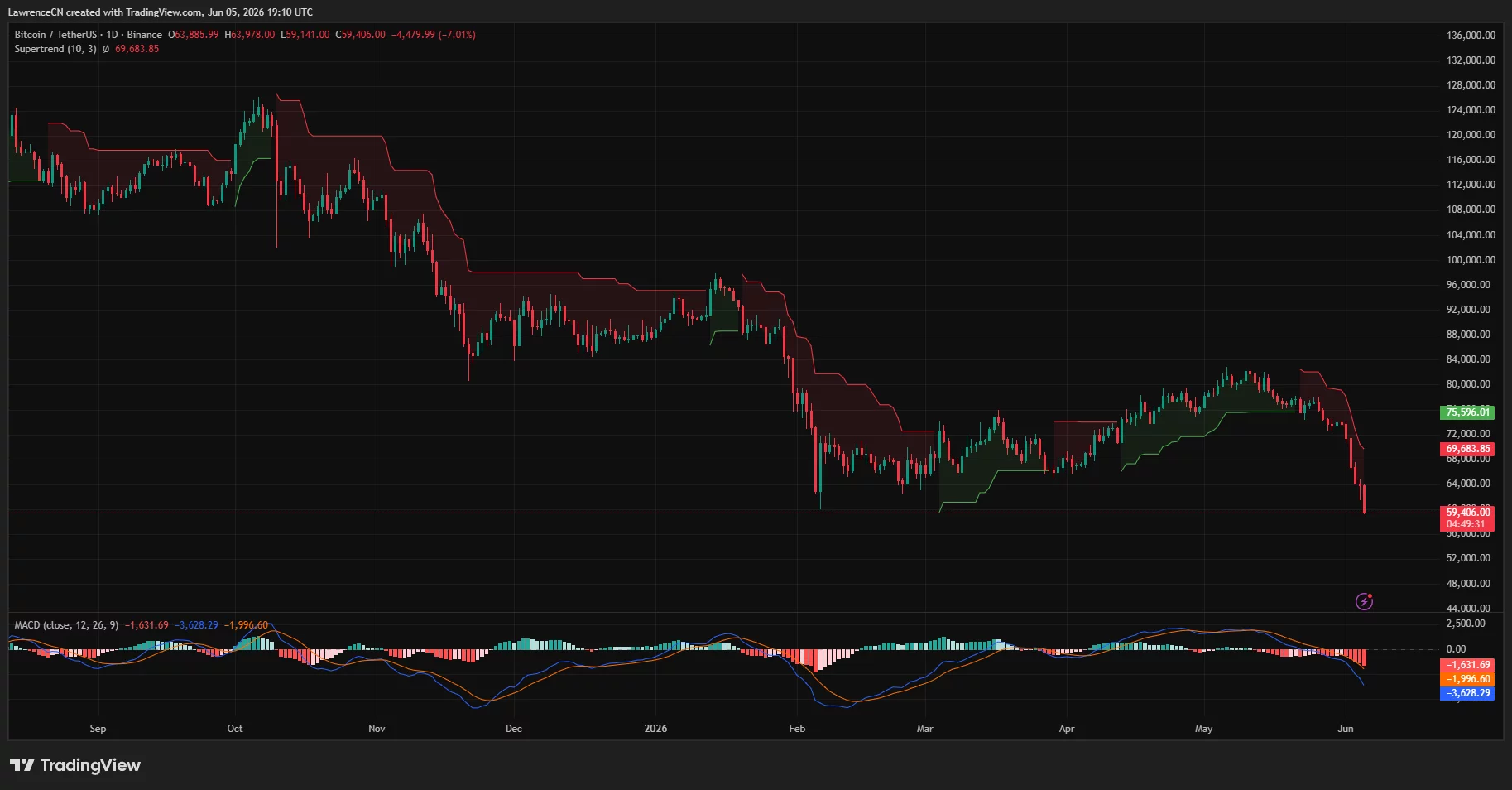
Momentum indicators also remain weak. The MACD line has dropped sharply below the signal line while the histogram continues to expand in negative territory, showing persistent downside momentum after the breakdown from the $72,000-$75,000 range.
The loss of $60,000 leaves the February low near $55,000 as the next major support zone. A decisive break below that area could expose the psychological $50,000 level and trigger another round of liquidation-driven selling.
Bulls would need to reclaim $60,000 quickly to ease immediate pressure. A recovery above the Supertrend resistance near $69,700 would invalidate the current bearish structure and reopen the path toward the $75,000 area. Until then, stronger-than-expected economic data, rising rate-hike expectations, and heavy derivatives positioning remain key risks for Bitcoin.
Disclosure: This article does not represent investment advice. The content and materials featured on this page are for educational purposes only.